Foundations
A Simple Guide to the Vastu Diagram
2 minute read
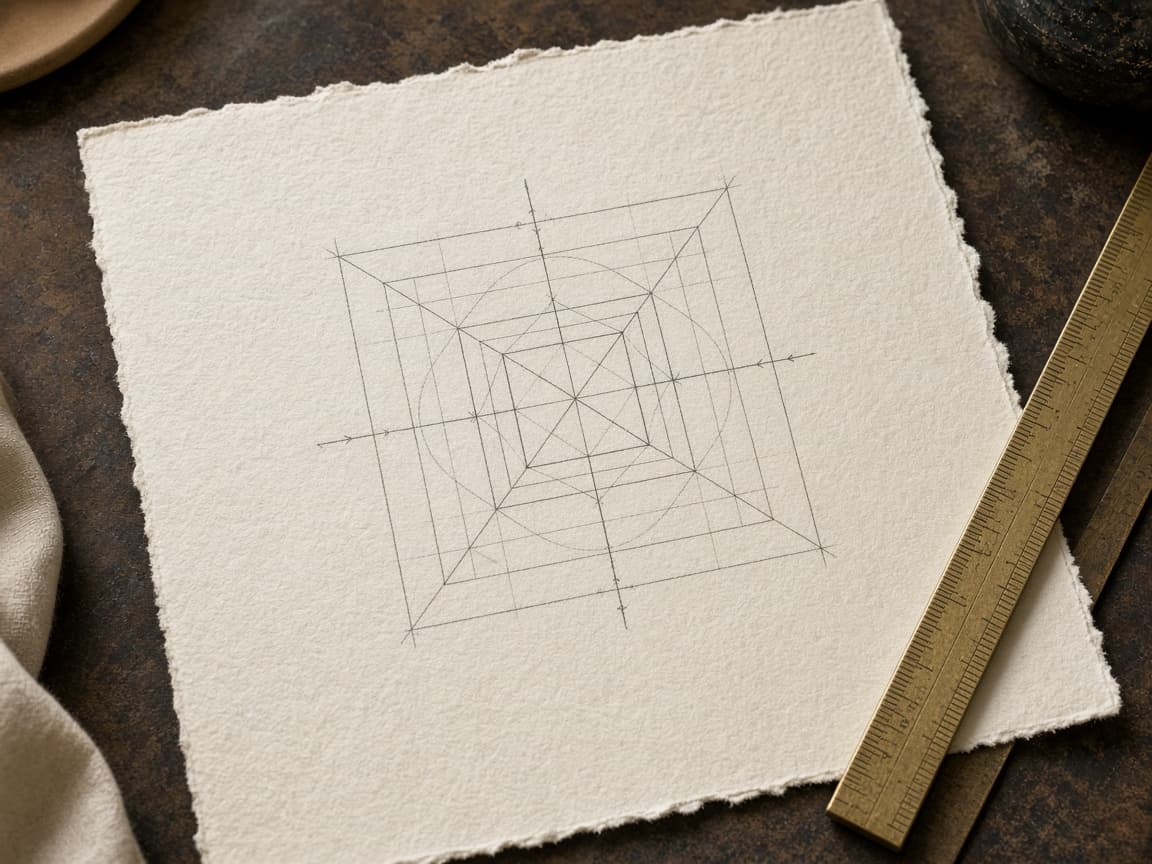
A diagram, not a verdict
The Vastu Purusha Mandala is a traditional diagram used to think about a site. In classical planning it is described as a square field divided into smaller squares, often spoken of as a grid of sixty-four or eighty-one parts. The centre is commonly called the brahmasthan. Around it, the grid gives a consultant a shared language for edges, corners, and the middle of a plan.
This page explains the idea. It does not read your floor plan. A drawing on a screen cannot tell you what a property needs.
How the diagram is used
During a consultation the mandala is a way of paying attention. Where is the entrance in relation to the plot? Which rooms sit at the centre, and which sit against an edge? Which part of the building carries the concern the client has brought? Those are questions about a real place. The diagram helps organise them. It does not replace walking through the property.
Different teaching lineages describe the grid with different emphasis. This consultancy does not publish a universal chart that assigns a remedy to each square. Sanjeev Jain uses the inherited approach he works with, and he applies it after seeing the property.
What this website will not do
An animated mandala on the homepage is a visual mark of the practice. It is not an assessment tool. Uploading a plan to a form does not generate a Vastu reading. Plans are stored so the visit can be prepared, and the reading happens with the consultant.
A note on sources
Classical treatises on Indian architecture discuss site, measure, and orientation. This article does not quote them, because a paraphrase presented as scripture would be misleading. If a specific textual passage is used in the consultancy’s published writing, it will be given with its source.
The useful point for a client is simpler. The mandala is a traditional way of looking. The consultation is personal because the property is particular.